
In off-page SEO, two common link-building strategies are guest posting and link exchanges. While both aim to improve your website’s visibility and search rankings, they work very differently and have distinct benefits and risks.
In this guide, we’ll break down how guest posting compares to link exchanges, explain their impact on SEO, and help you choose the best approach for 2026.
For a complete roadmap on guest posting, see our Ultimate Guide to Guest Posting in 2026.
What Is Guest Posting?
Guest posting, or guest blogging, is the practice of writing and publishing content on another website or blog.
Key points:
- You create original content for the host site.
- Includes editorial backlinks pointing to your website.
- The content is reviewed and approved by the host, ensuring quality and relevance.
Guest posting builds high-quality backlinks, drives targeted referral traffic, and establishes your authority in your niche.
For more details on benefits, see our cluster page Benefits of Guest Blogging.
What Are Link Exchanges?
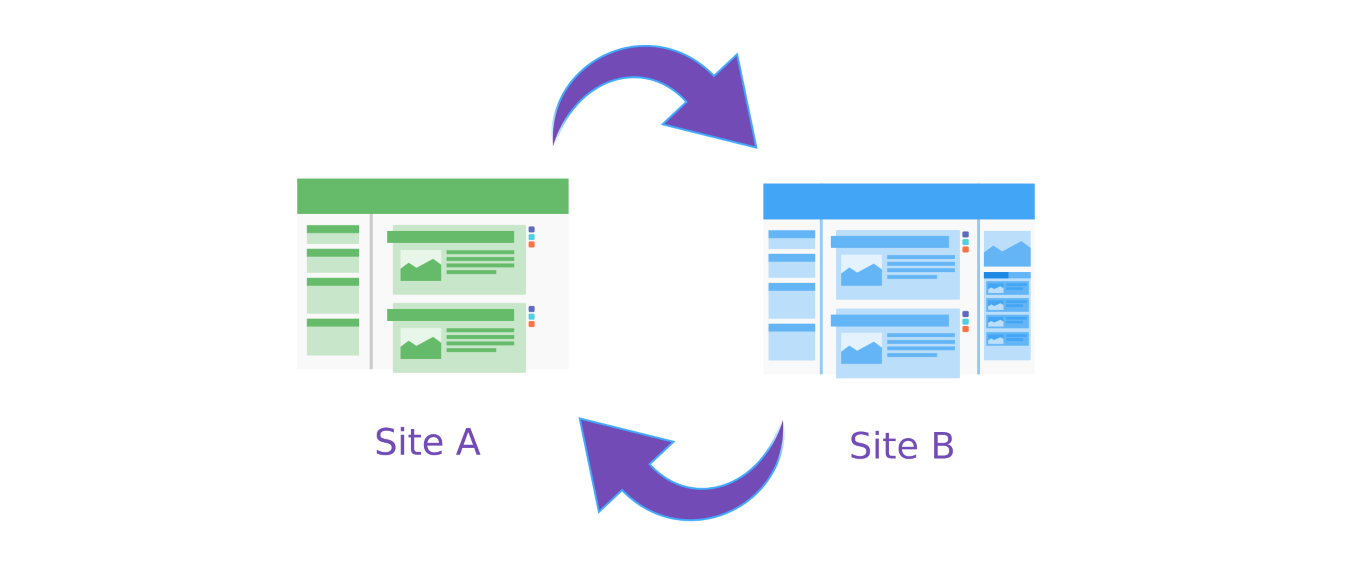
Link exchanges, also called reciprocal linking, involve trading backlinks between two websites.
Key points:
- Website A links to Website B, and Website B links back to Website A.
- It is often done informally or through agreements between site owners.
- Typically does not involve creating high-value content.
Link exchanges were widely used in the early days of SEO but have become risky due to Google’s stricter algorithms.
Key Differences Between Guest Posting and Link Exchanges
| Feature | Guest Posting | Link Exchanges |
| Content Creation | New, high-quality article | Usually none, just a link swap |
| SEO Value | High, editorial backlink | Low to moderate, risk of penalties |
| Editorial Control | Required | Rarely required |
| Relevance | High if targeted | Can be irrelevant |
| Risk | Low if high-quality sites | High if overused or spammy |
| Brand Exposure | Medium to high | Low |
| Long-Term Value | Lasting | Limited, can be devalued by Google |
How Guest Posting Improves SEO
Guest posting is a strategic, high-value link-building tactic.
- Editorial Backlinks: Links earned through guest posts are considered high-quality and safe.
- Targeted Referral Traffic: Readers from relevant blogs are more likely to visit your site.
- Authority Building: Regular guest posts strengthen your brand’s credibility in your niche.
- Keyword Relevance: Anchor text in guest posts can improve ranking for specific keywords.
See our cluster page How Guest Posts Improve Google Rankings for deeper insights.
Risks of Link Exchanges
Link exchanges carry several risks for SEO in 2026:
- Google Penalties: Reciprocal links with low relevance can be flagged as unnatural.
- Low SEO Value: Many link exchanges provide minimal authority compared to editorial guest posts.
- Poor Relevance: Linking to unrelated websites may confuse search engines.
- Temporary Benefit: If one site removes the link, the value disappears.
While link exchanges are easy to implement, the SEO payoff is uncertain and often outweighed by the risks.
Benefits of Guest Posting vs Link Exchanges
| Benefit | Guest Posting | Link Exchanges |
| High-Quality Backlinks | ✅ | ⚠️ Limited |
| Safe for SEO | ✅ | ⚠️ Risky if overused |
| Targeted Traffic | ✅ | ❌ Rarely relevant |
| Long-Term Value | ✅ | ❌ Often temporary |
| Brand Exposure | ✅ | ❌ Minimal |
| Authority & Credibility | ✅ | ⚠️ Low |
When to Use Guest Posting vs Link Exchanges

Guest Posting
- Build long-term authority
- Drive targeted traffic
- Earn high-quality editorial backlinks
- Ideal for businesses focusing on sustainable SEO and brand growth
Link Exchanges
- Rarely recommended for modern SEO
- May be used for mutually relevant partners in low-risk niches
- Should never be a primary SEO strategy
In 2026, guest posting remains the safer and more effective choice for SEO and authority building.
Best Practices for Guest Posting
- Choose websites that are relevant to your niche
- Focus on high-authority blogs with real traffic
- Write valuable, original content
- Use natural anchor text
- Track backlinks, traffic, and rankings
Common Link Exchange Mistakes
- Linking to irrelevant sites
- Exchanging links excessively
- Ignoring quality and authority
- Relying on link swaps instead of genuine content strategies
Overusing link exchanges can harm SEO rather than help.
Combining Guest Posting with Other Strategies
While link exchanges are risky, guest posting can be combined with other strategies like digital PR, niche edits, and internal linking to maximize SEO value.
This creates a balanced backlink profile, strengthens domain authority, and improves rankings sustainably.
Conclusion
Guest posting is a proven, high-value SEO strategy, while link exchanges are risky, outdated, and low-value in 2026.
- Use guest posts to build authority, drive targeted traffic, and earn editorial backlinks.
- Limit or avoid link exchanges unless they are highly relevant and natural.
- Focus on creating a topical authority cluster around guest posting for long-term SEO growth.
For a complete roadmap and strategy, see our Ultimate Guide to Guest Posting in 2026